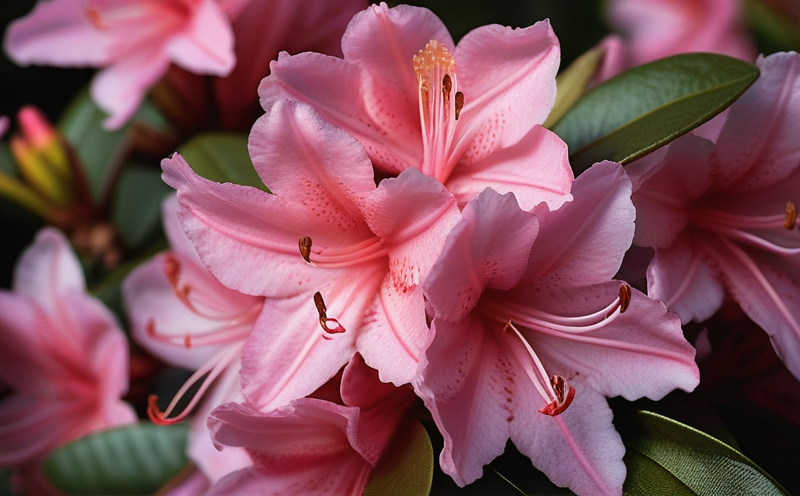
🥑 Rhododendron / Azalea

Rhododendron spp. (including subgenus Azalea)
exotics shrub
Illustration of Rhododendron / Azalea
☀️ Sun
partial shade to full sun (depending on variety)
💧 Water
moderate to high
🗺️ Zones
4-9 (varies by species; some hardy to zone 3, some tropical)
🪴 Soil Type
loamy, high organic matter
🧪 Soil pH
4.5-6.0
💧 Drainage
well-drained
📏 Spacing
3-10 feet (depending on mature size)
📐 Height
2-25 feet (depending on species)
📅 Days to Maturity
730-1095 days (2-3 years to significant bloom)

🍴 Edible Parts

🍽️ none — ALL PARTS TOXIC if ingested

🤝 Companions (11)

Both are ericaceous (acid-loving) plants with identical soil pH and moisture requirements; they share the same mycorrhizal networks
They thrive in the same acidic, organic-rich soil conditions and can be grown together in dedicated ericaceous beds
🤝 Pine (any species)
Pine needle litter naturally acidifies soil and creates the perfect mulch for rhododendrons; pines provide dappled shade
🤝 Camellia
Camellias share acid-soil requirements and thrive in similar dappled light; glossy evergreen foliage complements rhododendron blooms.
🤝 Pieris (Andromeda)
Pieris is an ericaceous shrub blooming before rhododendrons, extending the season; identical soil and moisture needs make them perfect companions.
🤝 Mountain Laurel (Kalmia)
Mountain laurel thrives in the same acidic, woodland-edge conditions; their bloom times overlap beautifully with rhododendrons.
🤝 Heather (Calluna/Erica)
Heathers provide year-round ground cover in acidic soil; different bloom times ensure continuous garden interest alongside rhododendrons.
🤝 Fern (Woodland types)
Woodland ferns thrive in rhododendron shade; they add texture and help retain soil moisture with frond litter.
🤝 Hosta
Hostas love dappled shade beneath rhododendrons; bold foliage contrasts and they appreciate the acidic, organic-rich mulch.
🤝 Hydrangea (blue cultivars)
Blue hydrangeas require acidic soil for their signature color — the same conditions rhododendrons need; stunning flowering combination.
🤝 Witch Hazel (Hamamelis)
Witch hazel blooms in late winter before rhododendrons; tolerates acidic soil with open branching that allows sufficient light.

⚠️ Keep Apart (7)

⚠️ Walnut (Black)
Juglone toxicity causes severe wilting, leaf necrosis, and death in rhododendrons; they are highly sensitive to juglone
Lavender requires alkaline, dry soil — the exact opposite of rhododendron's acidic, moist requirements
Rosemary prefers alkaline, well-drained, dry soil conditions that are incompatible with rhododendron cultivation
Sage requires alkaline, dry, well-drained soil — the complete opposite of rhododendron conditions; one will fail.
Thyme needs alkaline, sharply-drained soil and full sun; these Mediterranean conditions will kill acid-loving rhododendrons.
Mediterranean herbs like oregano demand dry alkaline soil; near rhododendrons results in root rot for oregano or chlorosis for rhododendron.
⚠️ Lilac
Lilacs prefer neutral to slightly alkaline soil and cannot thrive in acidic rhododendron conditions; they also need more sun.

💊 Medicinal Uses

Rhododendron species contain grayanotoxins (andromedotoxins) which are toxic to humans and most animals — ingestion causes nausea, vomiting, hypotension, cardiac arrhythmias, and in severe cases, death. Despite toxicity, certain species have traditional medicinal uses. Rhododendron anthopogon and R. ferrugineum are used in Tibetan, Ayurvedic, and traditional European medicine for rheumatism, gout, and respiratory issues in carefully processed external preparations. Rhododendron honey ('mad honey') from nectar of certain species (especially R. ponticum and R. luteum) has been used traditionally in very small doses as a stimulant and blood pressure regulator in Turkey and Nepal. Modern research has identified antimicrobial and anti-inflammatory compounds in some species.

📜 History & Traditional Uses

Rhododendrons have been cultivated in China and Japan for over 1,000 years as ornamental plants. The genus name comes from Greek 'rhodon' (rose) and 'dendron' (tree). European exploration of the Himalayas in the 19th century brought hundreds of new species to Western gardens, sparking a rhododendron craze in Victorian England. The massive collection at Kew Gardens and the work of plant hunters like Joseph Hooker and George Forrest led to the development of thousands of hybrids. In Nepal, rhododendron (R. arboreum) is the national flower, and its flowers are used to make a popular beverage. In Appalachia, native rhododendrons (R. maximum) create dense 'laurel hells' that define the ecology of mountain coves.

📝 Notes

Rhododendrons and azaleas are acid-loving plants in the Ericaceae family (same family as blueberries and heathers). They require acidic soil (pH 4.5-6.0), consistent moisture, and excellent drainage — they will not tolerate wet feet or alkaline soils. Their shallow, fibrous root systems benefit greatly from mulching with pine needles, oak leaves, or bark. All parts contain grayanotoxins — even honey made from their nectar can be toxic ('mad honey disease'). Azaleas are technically a subgenus within Rhododendron, distinguished by having 5 stamens (versus 10+ in most rhododendrons). They are important nectar sources for bumblebees and swallowtail butterflies.