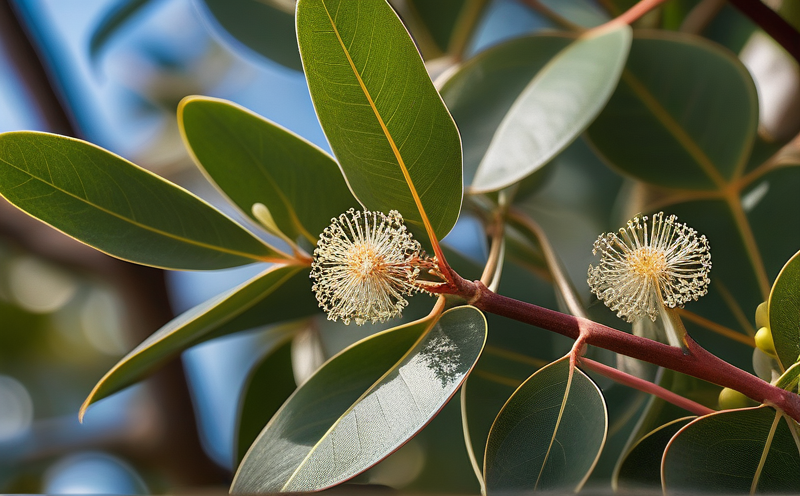
🥑 Eucalyptus
🍴 Edible Parts
🤝 Companions (11)
⚠️ Keep Apart (7)
💊 Medicinal Uses
Eucalyptus essential oil (from E. globulus and others) is one of the world's most widely used medicinal essential oils. Its primary component, 1,8-cineole (eucalyptol), has potent antimicrobial, expectorant, anti-inflammatory, and analgesic properties. Eucalyptus oil is used in steam inhalations and chest rubs for respiratory congestion, bronchitis, sinusitis, and asthma. It has demonstrated antibacterial activity against Streptococcus, Staphylococcus, and Haemophilus influenzae. The oil is used topically (diluted) for muscle and joint pain, arthritis, and as an insect repellent. CAUTION: Eucalyptus oil is toxic if ingested — as little as 3.5 mL can be fatal. Internal use requires professional supervision only.
📜 History & Traditional Uses
Eucalyptus is native to Australia and nearby islands, where Aboriginal Australians used the leaves for fever, wounds, and respiratory issues for thousands of years. European botanists first collected specimens during Captain Cook's 1770 voyage. Eucalyptus was rapidly adopted globally in the 19th century — planted across the British Empire, Mediterranean, India, Africa, and the Americas for timber, windbreaks, and to 'improve' malarial swamps (draining wetlands). The trees became symbols of certain landscapes — eucalyptus groves define the character of the California coast, Portuguese forests, and Ethiopian highlands. Today, eucalyptus is the world's most widely planted hardwood genus.
📝 Notes
Eucalyptus is famously problematic in gardens and agroforestry due to its allelopathy — the leaves, bark, and roots release chemicals that inhibit the germination and growth of many other plants. The trees are 'water pumps,' aggressively extracting soil moisture and lowering water tables, which can devastate nearby plantings. Eucalyptus leaf litter creates a thick, fire-prone duff that resists decomposition. The trees are pyrophytic — many species depend on fire for seed release. They should NOT be planted near food gardens, fruit trees, or annual crops. On the positive side, eucalyptus is an extremely fast-growing, valuable timber and pulp crop, and the flowers are excellent bee forage producing distinctive honey.